Good Learning Toys for 2-Year-Olds: What Really Helps
Two-year-olds learn with their whole bodies. They mouth, move, stack, drop, and try again. A good learning toy at this age hands a small, clear challenge and a predictable result: stack these, fit that, push and watch it go. Those tiny successes are the building blocks of confidence.
A great learning toy doesn’t lecture. It offers an invitation — “try this” — and then lets a toddler experiment. It’s forgiving, tactile, and repeatable. Here are the kinds of toys that keep returning value, explained plainly and kindly.
Chunky Building Pieces — Practice with Purpose
Big blocks and chunky interlocking bricks are perfect for two-year-olds. They fit little hands, are simple to stack, and tumble in a way that teaches cause and effect. Each rebuild is practice in spatial sense and motor control.
What to look for: rounded edges, pieces large enough to avoid swallowing hazards, and a satisfying weight or click that makes handling rewarding.
Shape Sorters and Simple Puzzles — Early Thinking, Made Playful
A shape sorter is a tiny logic lesson: rotate, test, insert. Puzzles with big knobs and three to six pieces teach matching and hand-eye coordination. These toys give quick wins that feel earned.
What to favor: clear shapes, bright but simple images, and a level of challenge that allows success with a little effort.
Push, Pull, and Ride-On Toys — Movement That Teaches
Toddlers learn by moving. Push toys, pull-alongs, and small ride-ons help refine balance and coordination. Movement toys link an action (push) to a consequence (toy rolls), which is core to early learning.
Choose sturdy wheels, low centers of gravity, and handles sized for small hands. The steadier the toy, the more adventurous the toddler will be.
Sensory and Manipulative Toys — Calm, Focused Practice
Play dough, textured blocks, and bead-stringing with oversized beads build fine motor skills and sensory awareness. Sensory bins—rice, pasta (supervised), or large beads—encourage scooping, pouring, and sorting, all of which tune attention and hand control.
Opt for non-toxic, washable materials and toys that can be rinsed or wiped clean.
Simple Art Tools — Expression and Control
Chunky crayons, washable markers, and sticker pads invite mark-making and finger strength. Art at two is less about the picture and more about learning wrist and finger movement, exploring cause (press, mark), and discovering colors and textures.
Keep art sessions short, offer large drawing surfaces, and use materials designed for easy cleaning.
Musical Toys — Rhythm, Language, and Joy
Small drums, shakers, and xylophones teach cause-and-effect and help toddlers practice listening and timing. Music encourages repetition and social interaction; rhythm play often becomes a shared family moment.
Pick instruments that sound pleasant and aren’t too loud—ones that invite tapping and copying rather than startling.
Pretend-Play Props — Small Stories, Big Skills
Even at two, pretend plays blooms: toy phones, soft dolls, and simple kitchen sets let toddlers imitate daily routines. This practice builds language, sequencing, and social imagination.
Keep props durable and washable. Little hands love objects that resemble “real” adult tools but are safe and simple.
Board Books and Storytelling Aids — Language Without Pressure
Board books with repetition, textures, and flaps foster vocabulary and attention. Felt boards or puppet toys make stories tactile—moving a felt fish across a sea teaches sequencing and narrative play.
Choose short, rhythmic books that invite joining in and pointing rather than long, detailed plots.
Safety and Durability — The Essentials
For two-year-olds, safety is non-negotiable. Ensure toys:
- Have large, non-detachable parts
- Use non-toxic, washable materials
- Have rounded edges and sturdy construction
Durable toys survive real play and invite bolder exploration; that’s where learning accelerates.
Building a Small, Balanced Toy Box
A compact starter set works wonderfully:
- One building toy (blocks or big bricks)
- One sorter/puzzle
- One push/pull or ride-on item
- One sensory kit (play dough, bin)
- One musical or art tool
- A few sturdy board books
This mix covers gross and fine motor skills, language, sensory play, and imagination.
Little Repeats, Big Gains
The secret with two-year-olds is repetition: the same small action, done again and again, becomes confidence. Good learning toys are those that invite that repetition without boredom. They’re simple, satisfying, and built to be tried a hundred times.
Explore thoughtfully chosen options at Sonpal Toys. For snapshots of play and quick ideas, visit Our Instagram.
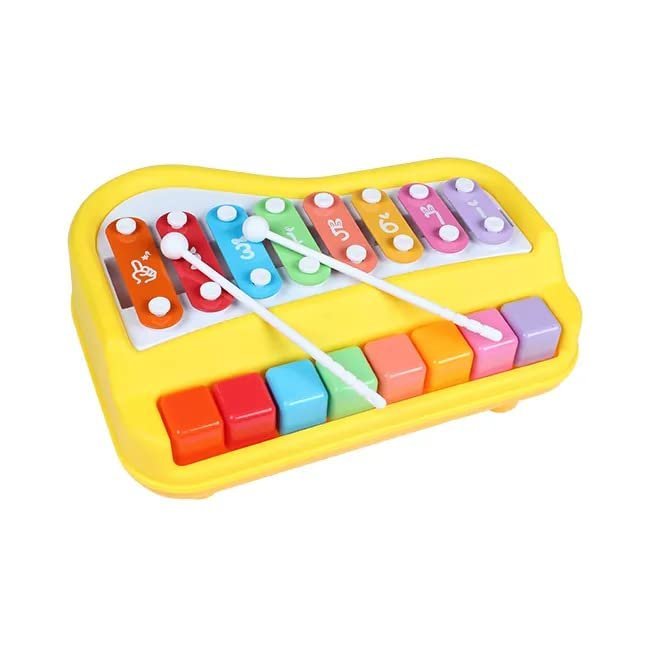
2 in 1 Musical Xylophone and Mini Piano for Kids – Educational Musical Instruments Toy Set for Babies, Non-Battery- Assorted Color (Big)
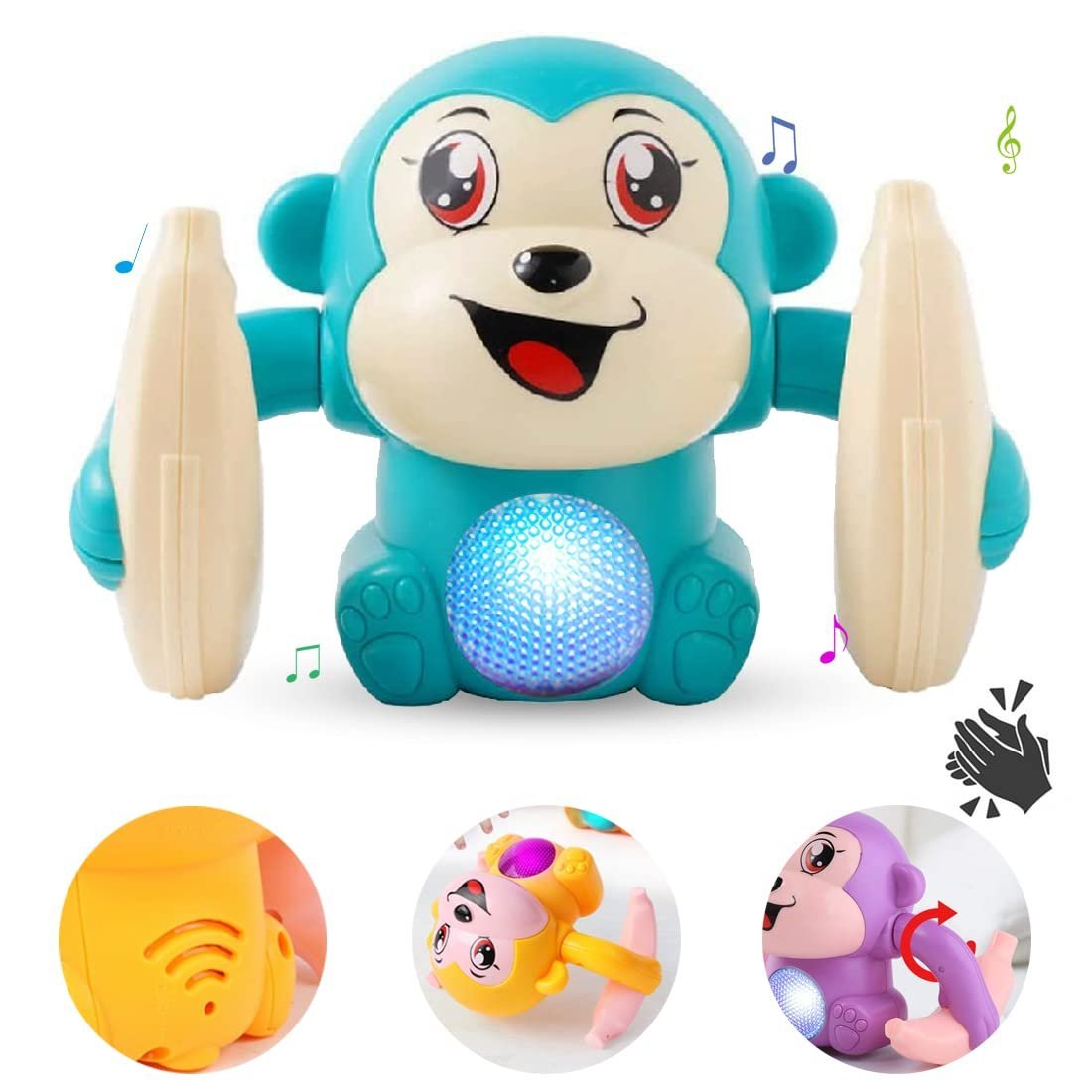
Dancing Monkey Musical Toy for Kids Baby Spinning Rolling Doll Tumble Toy with Voice Control Musical Light and Sound Effects with Sensor – ISI Mark – Made in India