


Learning Toys: Play That Teaches (Without Sounding Like School)
If there’s one truth about young children, it’s this: they learn best when they’re busy and enjoying themselves. Learning toys are the quiet partners in that process — they don’t preach, they offer a small challenge, and they reward curiosity with an obvious result. The right learning toy hands a child a question and a safe way to explore the answer.
Think of learning toys as tools more than trophies. They sit patiently on a shelf, and when a child reaches for one, they offer a little experiment: “try this, see what happens.” That loop—attempt, result, try again—is where confidence, skill, and real understanding grow.
What Makes a Toy Truly Educational
Not every toy labeled “educational” earns the name. The best learning toys share a few human, practical qualities:
- Clear cause and effect. A child presses, turns, stacks, or sorts and sees an immediate outcome.
- Repeatable challenge. The toy rewards repetition; each attempt builds skill.
- Open-ended possibilities. Toys that can be used many ways last longer and encourage creativity.
- Tactile feedback. Small hands need texture, weight, and resistance to learn effectively.
- Social potential. Toys that work well alone and better with others teach sharing and language.
When a toy checks those boxes, learning sneaks in while the child is busy playing.
Useful Categories of Learning Toys (and Why They Work)
Here are categories that reliably deliver learning through play — explained like a neighbor who’s picked them up, used them, and watched the results.
- Sensory & Manipulative Toys
Why they matter: These are for touching, squeezing, pouring, and sorting — foundational work for attention and motor skills. Think play dough, sensory bins, textured beads, or stacking cups. - Building & Construction
Why they matter: Blocks, magnetic tiles, and snap kits teach balance, spatial thinking, fine motor control, and planning. Tumble a tower and you’ve got a lesson in physics and persistence. - Puzzles & Logic Games
Why they matter: Puzzles hone attention and pattern recognition. Matching and sequencing games teach memory and the idea that some things belong together. - Early Math & Sorting Tools
Why they matter: Counters, abacuses, and sorting trays make numbers concrete. Children group, compare sizes, and begin notice patterns—math becomes a hands-on activity, not an abstraction. - Language & Story Toys
Why they matter: Letter magnets, story cards, puppet sets, and rhyme games build vocabulary, narrative thinking, and early literacy through play and repetition. - STEM & Maker Kits
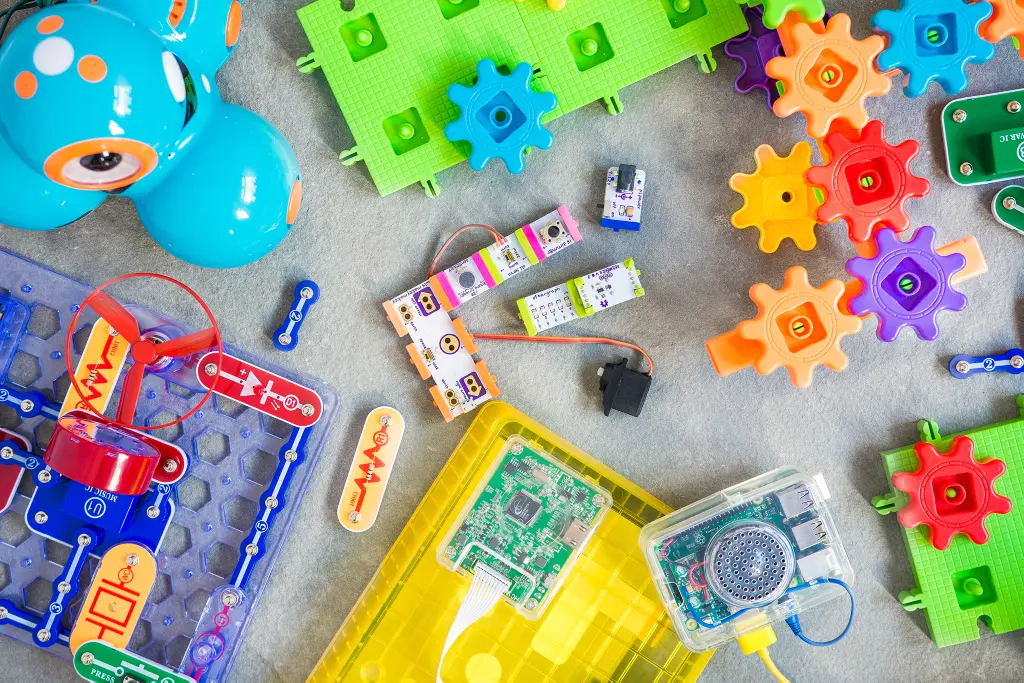
Why they matter: Beginner robotics, gear sets, and simple circuit kits teach sequencing, prediction, and troubleshooting. They turn “why” into “let’s try” without screens. - Pretend-Play & Role-Play
Why they matter: Kitchens, costumes, and tool kits let kids rehearse real life. Role-play strengthens social skills, sequencing, and empathy. - Music & Rhythm
Why they matter: Instruments and rhythm toys sharpen listening, timing, and memory while being joyous and social. - Movement & Gross-Motor Toys
Why they matter: Ride-ons, balls, and balance boards develop physical coordination, timing, and body awareness — all essential for other classroom skills later on.
How to Choose a Learning Toy — Practical, Human Tips
- Start with the child, not the label. Are they a mover, a builder, a storyteller? Let temperament guide the buy.
- Feel it. If you can touch it in person: does it feel sturdy and comfortable in a child’s hand?
- Check the “one good thing” rule. A great learning toy usually does one core thing very well.
- Avoid the flashy trap. Toys that do everything often do nothing deeply. Subtlety is smarter.
- Look for reusability. Kits with refill options or multi-use pieces stretch value and sustain interest.
- Age and safety first. Non-toxic, no choking hazards, and appropriate complexity. Always.
How Adults Help Learning Happen (Without Taking Over)
The most effective nudges are small and gentle:
- Model once, then step back. Show a single action and give the child room.
- Ask curious questions. “What do you think will happen if…?” invites planning.
- Celebrate attempts. “You tried a new way—nice thinking.” Praise risk-taking, not just success.
- Rotate toys. Put some away and bring them back later — they feel new again and spark fresh learning.
- Use play in daily life. Count stairs, sort laundry, or make up stories for dinner — learning toys plus routines equals steady growth.
A Few Humble, Real-World Toy Ideas (That Actually Get Played With)
- A set of chunky wooden blocks or magnetic tiles (open-ended building).
- A small sensory bin with scoops and cups (exploration, fine motor).
- A 12–24 piece puzzle with knobs for small hands (focus and problem solving).
- Counting bears and cups or a simple abacus (hands-on math).
- A puppet kit or story card deck (narrative practice and language).
- A beginner circuit or gear kit (maker thinking without screens).
- A small rhythm set — shakers and a xylophone (music and timing).
These are the kinds of toys that make repeated appearances in playrooms because they quietly ask kids to try, think, and repeat.
Where to Look (Practical)
If you want a curated selection of learning toys chosen for durability and play value, explore Sonpal Toys. For short demos and simple activity ideas, check Our Instagram.
Final Thought — Learning Happens in Little Steps
Learning toys are small invitations to experiment: to try, fail, adjust, and try again. Over days and weeks those tiny experiments build problem-solving, motor skills, language, and confidence. Pick toys that are tactile, repeatable, and open-ended. Play alongside for a minute, then step back and watch curiosity do the teaching. That’s the humane, human way learning really takes root.
