


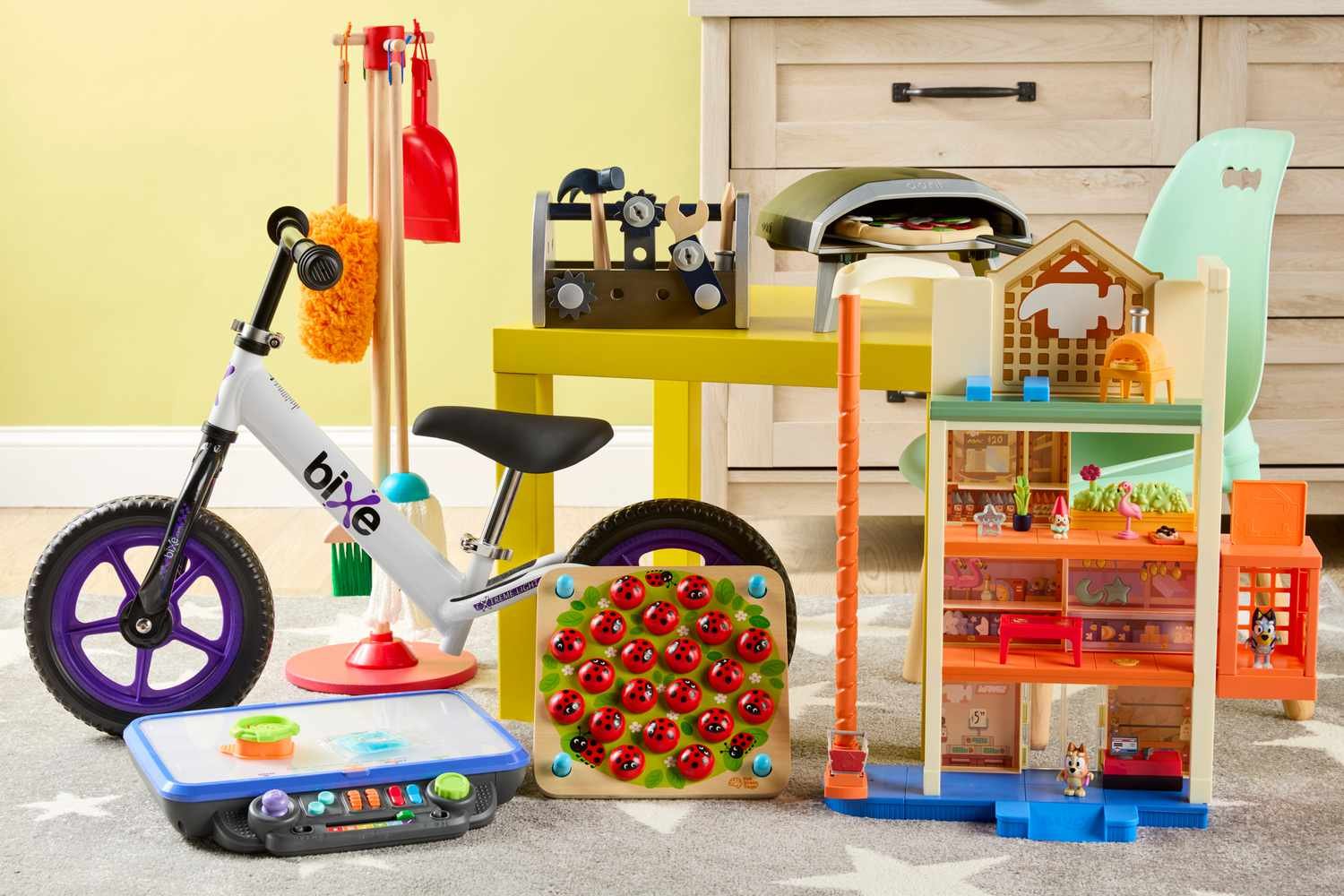
What a Good Toy Really Is
A good toy is less an object and more a small promise. It promises to be interesting enough to invite play, sturdy enough to survive it, and open enough to be used again and again. The best toys don’t have to be the newest or the most expensive — they simply do a few things well: they feel right in a child’s hand, they offer small challenges, and they leave room for imagination.
When I think about a good toy, I picture a child returning to it several days later and discovering something new. That’s the test: if it keeps giving, it’s earned the label.
It Invites, It Doesn’t Command
A good toy doesn’t insist on how to be played with. It nudges. It hints. It might have a tiny trick—one button, a spinning wheel, a pop of color—that starts a story, but then it steps back. The child supplies the narrative.
Think of simple blocks, a small wooden car, or a box of magnets. They don’t tell a child what to do. They offer pieces, and the child composes. That open-ended invitation is the heart of lasting play.
Tactile Satisfaction Matters
Children learn with their hands. A toy that clicks satisfyingly, fits snugly, or has a pleasant weight is more likely to be revisited. Texture, resistance, and sound—when used thoughtfully—give feedback that’s almost like a conversation between the toy and the child.
A good toy rewards touch. That’s why materials and finishes matter: wood that’s warm, plastic that snaps cleanly, fabric that invites cuddling.
A Little Challenge, Not Frustration
Good toys are tuned to a child’s ability. They offer small problems that are solvable with a little effort — enough to make success feel earned. If a toy is too easy, it gets boring. Too hard, and it’s abandoned. The sweet spot is where curiosity meets achievable challenge.
That’s why many of the best toys scale: building sets that start simple and get complex, puzzles that grow in piece count, or toys with adjustable settings. They let a child push just beyond their comfort without falling off.
Durability Builds Trust
A toy that breaks after one afternoon of real play loses more than money; it loses trust. Good toys are built to be handled — dropped, dragged, hugged, and sometimes forgotten under a couch. Durable construction, safe finishes, and thoughtful engineering mean a toy survives and becomes familiar.
When a toy lasts, it becomes part of the child’s routine. Familiarity invites deeper play.
Quiet Feedback Over Constant Noise
Toys that constantly flash lights or play music can be fun, but the best long-term toys use feedback judiciously. A small chime at the right moment, a light that marks completion, or a satisfying mechanical click—those little responses reward attention without drowning it.
Reserve spectacle for the rare, meaningful moment. Subtlety keeps play focused and imaginative.
Social Potential
A good toy often works alone and better with company. It teaches how to share, how to take turns, or how to build something together. Shared play adds language, negotiation, and empathy to the learning the toy already offers.
Little rituals—racing cars, trading pieces, or performing a reveal—turn a toy into a social tool and a memory-maker.
Safety and Simple Design
Safety is part of being a good toy. No sharp edges, non-toxic finishes, and size-appropriate parts—these are basics. Good design hides complexity beneath a simple face: mechanisms that are secure, joints that won’t pinch, and materials that are easy to clean.
Sensible design allows joyful play without worry.
The Right Toy for the Right Moment
Not every good toy fits every child or every day. Sometimes the right choice is a calming sensory item after a busy morning. Sometimes it’s a fast little racer for an energetic romp outside. Think in terms of moments: quiet focus, social play, creative making, or physical activity.
A small, well-chosen toy for the moment will always be better than many mismatched ones.
Where to Find Thoughtful Toys
If you’re looking for toys that feel good, do a few things well, and last through real play, explore options at Sonpal Toys. For snapshots of toys in real use and fresh arrivals, visit Our Instagram — little clips and ideas that show how a good toy becomes part of a child’s day.
A Final, Human Thought
The truth about a good toy is simple: it’s generous. It gives attention back to the child. It survives the rough work of play. It rewards repetition and invites invention. When you hand a child a good toy, you’re not just giving them an object — you’re offering a small, repeatable chance to discover, fail, and succeed. That’s the real value.
