


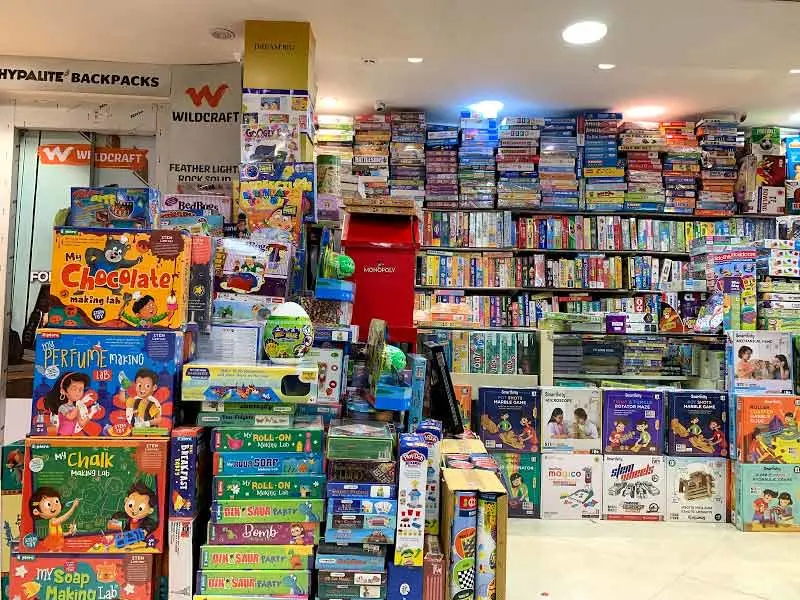
Best Toys in India — Objects That Invite Discovery
The best toys are not the loudest. They are the ones that reward repetition, tolerate rough handling, and invite the same attention tomorrow. In many homes and playrooms across India, certain toys keep appearing in those slow, meaningful scenes: a set of wooden blocks with worn edges, a simple puzzle that resists and then rewards, a musical toy that coaxes rhythm from tiny hands. These objects are small tools of discovery, doing their work without spectacle.
A well‑made toy suggests an activity rather than prescribing it. A block becomes a house, a boat, a bridge; a soft figure becomes a companion in an invented story. That suggestion—rather than instruction—is what makes play fertile. It leaves room for invention.
Senses at Work
Learning often begins through the senses. Texture, temperature, sound, and weight are the first languages a young child understands. A smooth wooden bead in the palm, the hollow clack of a stack as it falls, the soft chime when a shape fits—these sensations register, repeat, and form patterns. Toys that honor tactile and auditory subtleties invite longer attention. Repetitive handling becomes not boredom but practice.
Materials matter. Natural textures warm under the hand; fabrics that breathe invite cuddling; finishes that are safe and matte reduce glare and keep focus. Toys that feel pleasant to hold are toys that get returned to, again and again.
Small Lessons, Quietly Given
The most memorable lessons are often the most unobtrusive. Balance and gravity are learned through towers that wobble. Counting begins while stacking rings. Cause and effect is discovered when pressing a button produces a light or tone. These are not classroom moments so much as the everyday experiments of childhood.
Design that supports these discoveries tends to be simple, with a single obvious affordance. A puzzle with well‑sized pieces that click into place, a sorting toy that offers recognizable shapes, a push toy that moves predictably—these attributes make repetition rewarding. Over time, repetition builds skill. Skill becomes confidence.
Durability as an Ethical Choice
Durability is more than a convenience; it is an ethical choice. Toys built to survive drops and chews reduce waste and preserve memory. A toy that can be passed between siblings, packed into bags, and rescued from the rainy day corner becomes part of family life rather than a disposable object.
Good construction—tight joins, safe finishes, and solid materials—signals that a toy was made to be used, not displayed. That practicality supports sustained play, which in turn makes learning happen more often and more deeply.
Open-Ended Play
Open‑ended play invites reinterpretation. Blocks become not just blocks but characters in a story. A simple wooden car suggests a race, a rescue mission, or a long imaginary journey. Toys that allow multiple modes of play resist boredom and encourage creativity.
This is where design and imagination meet. Objects that are neither too prescriptive nor too inert give children the raw material of invention: space. With space comes experimentation; with experimentation comes unexpected learning.
Sound, Movement, and Moderation
Interactive features—sounds, lights, gentle motion—have a place when used with restraint. A soft chime at the correct moment can reinforce success; a brief melody can encourage rhythm and movement. The effective interactive toy uses such cues sparingly, so the novelty supports play rather than dominating it.
Moderation matters because attention is a scarce resource. A toy that shouts for attention every few seconds short‑circuits deeper focus. Those that offer a quiet reward for a correct action, or a small burst of encouragement for completion, tend to support longer, more meaningful engagement.
Play That Connects
Toys become vessels for connection. A shared puzzle on the living room rug, a musical toy that invites duet, a block tower built together—these are moments where skills and social bonds grow in parallel. Play becomes conversation without words. Shared play builds turn‑taking, imitation, and early collaboration.
Small rituals form around these toys: the stacking set that appears at storytime, the train that begins every afternoon route. Rituals anchor memory; they make play predictable in the best sense, a repeated stage for creative exploration.
Aesthetics That Respect Attention
A quiet palette, honest materials, and clean forms help toys age gracefully. Toys that look as if they belong in the room instead of dominating it are more likely to be revisited. Subtle aesthetics do not mean muted fun; they mean attention is drawn to action rather than to decoration. When the object invites use rather than spectacle, the child becomes the performance.
The Long View
The best toys are small investments in a very long process. They are not instant fixes but durable companions in the slow job of learning. They support motor skills, pattern recognition, social play, and imagination — often all at once and without fanfare. Over months and years, the same toy can serve different roles; a stacking ring might later be a drum, a puppet might later be an audience.
For a curated selection that privileges material, longevity, and open‑ended play, the collection at Sonpal Toys offers examples of these principles in practice. Occasional glimpses of play and ideas appear on Instagram, where small, real moments of discovery are shared.
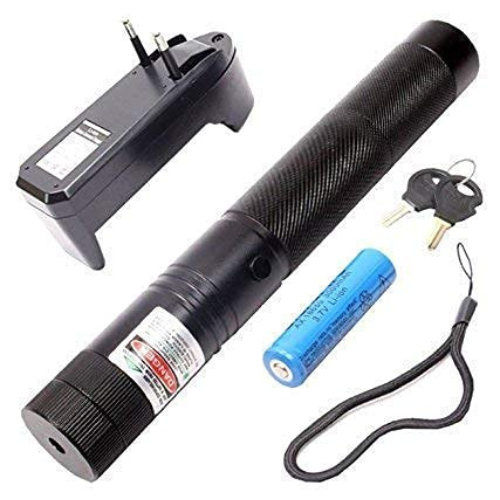
Aluminium Laser Light Powerful 1000MW Rechargeable Green Laser Battery Powered LED Pointer Pen for Kids to Play, 2000 Metres Laser Pointer High Power Pen, 5 Volts
1. Introduction
Meet the Famous Car 1:22 Scale High‑Speed RC Racing Car in Blue—a sleek, fast, and feature-rich racing toy designed to bring high-octane fun t…
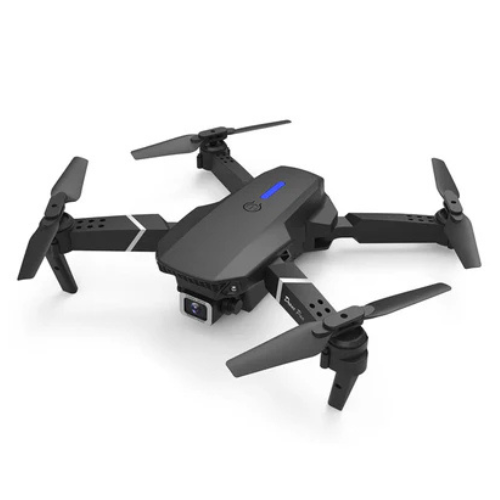
Take Flight with Style – Sonpal Toys E88 Foldable Drone with 4K Dual Camera, FPV Wi-Fi & 360° Flip Action
🚁 Sonpal Toys E88 Foldable Drone – 4K Aerial Photography Meets Fun & Adventure
At Sonpal Toys, we don’t just create toys—we design experiences. And the E88 Foldable Drone</stro…
