


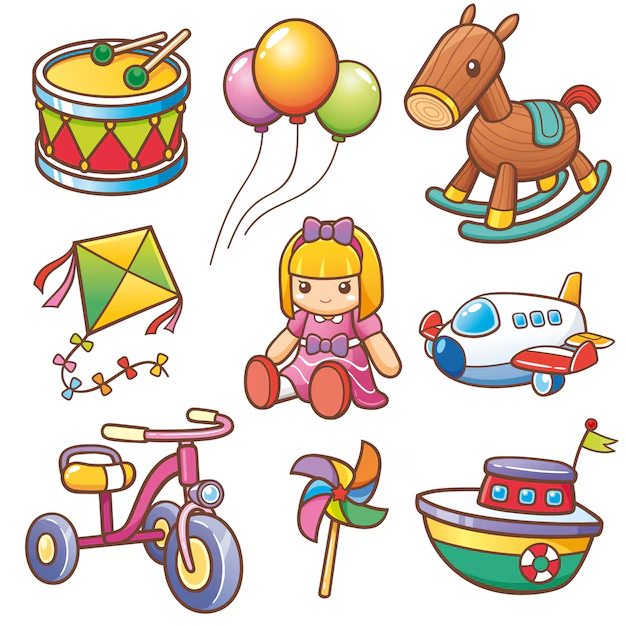
Sets of Toys: Why One Box Can Be Better Than Many
A set of toys is more than a box of pieces. It’s a little ecosystem—elements that play nicely together, grow with a child, and invite longer, deeper play. Unlike single-use gadgets, a good set encourages variety, problem solving, and storytelling. It becomes a toolkit a child returns to, adapts, and extends.
When you choose a set wisely, you buy coherence: parts that fit, themes that make sense, and multiple ways to play. That’s why sets often offer more value than a pile of random items.
What a Great Set of Toys Does
A well-designed set will:
- Encourage open-ended play (many outcomes, not one instruction).
- Scale with age and skill (simple starts, room to grow).
- Support social play (pieces to share or collaborate around).
- Teach a cluster of skills (fine motor, spatial thinking, storytelling).
- Store together so play can be resumed quickly.
If you watch a child play with a good set, you’ll see them invent: they combine pieces into a machine, build a city, or stage a whole puppet show. The set makes that invention easier.
Types of Sets That Keep Giving
Here are the kinds of toy sets I see used again and again—and why they matter.
Building & Construction Sets
Blocks, magnetic tiles, and modular kits give children the vocabulary of space and structure. They practice balance, planning, and revision—build, collapse, and build again.
STEM & Maker Sets
Kits with gears, simple circuits, or beginner robotics teach sequencing and logic. They reward trial and error: when a motor turns, the child understands cause and creation.
Role-Play & Dress-Up Sets
A kitchen set with utensils, a doctor kit with pretend tools, or a costume trunk invites storytelling, social roles, and language practice.
Art & Craft Sets
A good art set gives repeatable supplies: quality crayons, paints, brushes, and reusable paper. The set that refills easily becomes a habit, not a one-time project.
Puzzle & Game Sets
Multi-level puzzles or a family board-game box introduce rules, cooperation, and strategy that scale with age.
Vehicle & Track Sets
A box of cars plus track pieces turns into races, rescues, and city-building. It’s tactile, kinetic play that’s endlessly reworkable.
Sensory/Special Needs Sets
Bundled sensory items—textured blocks, weighted lap pads, fidget kits—support focus and regulation and can be especially useful in mixed-age homes.
How to Choose a Set That Will Actually Get Played With
Not every set is worth the shelf space. Here’s a human checklist that helps me choose:
- Look for open-ended parts. The more ways a piece can be used, the longer the set lasts.
- Check for stageability. Can a toddler start with simple play, and an older child do more complex things?
- Prefer modular or refillable supplies. Replaceable paint, extra blocks, or add-on packs extend life.
- Consider social value. Sets that invite two or more players tend to be used in group moments—playdates, siblings, parents.
- Feel the materials. If you can test it in-store, pick the set that feels sturdy and pleasant to touch.
- Think storage. A set that comes with a box or bag is easier to keep together and reuse.
If most of these are checked, you probably found a winner.
Ways to Make Any Set Feel New
Rotate pieces in and out. Combine sets for new possibilities. Use household items—boxes, fabric, spoons—to extend the theme. A simple routine helps: keep one “active” set on a low shelf and tuck others away for later. When you bring one back after a break, it plays like new.
Show interest without taking over: sit with a child for the first five minutes, model a trick or two, and then step back. A tiny nudge makes a set click for them.
Sets as Gifts: Why They’re Great Presents
A thoughtfully chosen set works beautifully as a gift. It’s immediately playable, usually has an obvious place to live, and often invites group play with siblings and friends. For birthdays consider one that “grows”—a set that the child can build on or that has multiple skill levels.
If you’re gifting for a family, choose a set with social pull: board games, art kits, or building sets are excellent communal gifts.
Durability and Care: Make the Set Last
Play is rough; sets need to be ready. Check fasteners, avoid tiny loose pieces for small children, and favor washable or wipeable surfaces. Many good sets include a way to replace parts—keep spare pieces or contact the maker if something breaks. A durable set becomes part of daily life, and that’s where real learning happens.
Where to Find Thoughtful Sets
If you want curated, well-made sets chosen for lasting play, explore Sonpal Toys. The right set will feel like a small workshop—a place a child returns to again and again. For quick ideas and little demonstrations of sets in action, see Our Instagram.
A Final, Human Thought
Sets of toys are quiet investments in play. They give structure without dictating the story. They invite collaboration, extend imagination, and reward repetition. Buy one good set, keep a few cheap surprises for variety, and rotate. Watch how a child returns to the same pieces and discovers something new each time—that’s the slow, steady magic of play.
