


Educational Toys for 6‑Year‑Olds: Play That Teaches and Delights
Six is a funny, exciting year. Many children are beginning school, reading more, asking bigger questions, and wanting projects they can be proud of. The best educational toys for 6 year olds meet them where they are: not too babyish, not too complex, but full of invitations to try, tinker, and think.
A good educational toy at this age is the kind that hands a child a problem and gives them tools to solve it. It rewards small experiments, makes mistakes safe, and leaves space for imagination. It’s practical and playful at once.
What Really Works at Six
Children this age thrive on success that feels earned. Look for toys that:
• Offer clear cause-and-effect.
• Let kids plan, test, and revise.
• Engage hands and eyes (fine motor + visual reasoning).
• Encourage language and storytelling.
• Scale in difficulty so they can grow with the toy.
When a toy hits those marks, learning happens naturally—through play, not a lecture.
Building and Engineering Kits
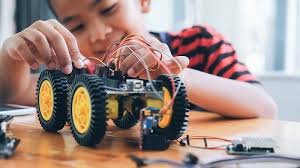
Six-year-olds love making something that “does” something. Simple building sets with gears, pulleys, or snap-together parts are gold. They teach sequencing, mechanical reasoning, and persistence.
Pick kits with big, sturdy pieces and short projects that can be completed in one sitting. The small wins—something that turns, lifts, or rolls—are exactly what keeps them coming back.
Early Coding and Logic Toys
You don’t need a screen to introduce coding ideas. Many tactile logic toys and programmable playsets use blocks or simple commands that teach sequencing and debugging. These toys make abstract concepts like “if…then” feel concrete and playful.
Choose toys that let children see immediate results. When a sequence works, they learn both cause and the satisfaction of building a plan that succeeds.
Math and Pattern Games
Counting is old news by six, but number sense is what matters now. Games that play with grouping, patterns, and basic arithmetic—using tokens, cards, or boards—turn math into a social, playful activity.
Look for games that reward strategy rather than speed. When children explain how they chose a move, you’re hearing real math talk, and that’s where understanding grows.
Word Play and Story Toys
At six, children are hungry for words. Story-building card decks, magnetic storyboards, and puppet sets push them to organize thoughts, sequence events, and practice new vocabulary. These toys make reading and storytelling a joyful performance rather than a chore.
As they narrate, they practice grammar, predict outcomes, and learn to hold a longer thread of ideas—skills that map directly to reading and writing.
Science and Nature Kits
Simple experiments—planting seeds, making volcanoes, testing sink-or-float—are perfect for curious six-year-olds. Kits that invite observation, recording results, and asking “why” build scientific thinking.
Choose kits that include a notebook or prompt questions; having a place to note what happened makes the process feel official and grown-up, which kids love.
Fine Motor and Practical Life Toys
Activities that refine the hand—bead threading, simple sewing cards, model painting—support writing and practical independence. Toys that mimic real life (toy tools, pretend kitchen sets with real-like knobs) help children practice real skills in safe ways.
At this age, mastery of small movements powers confidence in school tasks and everyday routines.
Social and Cooperative Games
Six-year-olds are ready for cooperative play. Games that require partners to solve puzzles together or team up to achieve a goal teach communication, turn-taking, and shared strategy. These social lessons are as educational as anything in a workbook.
A cooperative game that ends with everyone cheering is a small social success that matters more than any single winner.
Things to Avoid (or Use Sparingly)
• Overly scripted, single-outcome toys that end play quickly.
• Toys with tiny, fragile parts that frustrate more than help.
• Gadgets that do everything for the child—learning requires effort.
The best toys give tools, not answers.
How to Build a Small Playbox for a 6‑Year‑Old
If you’re assembling a starter set, aim for variety:
- One building/engineering kit (gears, pulleys).
- One early coding/logic toy (tangible commands).
- One math or strategy board game.
- One storytelling set (cards, puppets).
- One science or nature kit.
That mix covers hands-on thinking, language, numbers, and social skills.
Where to Start Looking
You can explore carefully chosen educational toys at Sonpal Toys. For real play snapshots, quick demos, and new arrivals, visit Our Instagram.
Quiet Wins, Big Growth
Educational toys for 6‑year‑olds don’t need to look like school to be useful. The best ones are quietly clever: they invite a child to plan, try, fail, and try again. Over weeks and months, those small efforts add up into reasoning, confidence, and a real sense of “I can do this.”

Chargeable Plastic Racing Car for Kids with Remote Control, Pack of 1, Multicolour

