


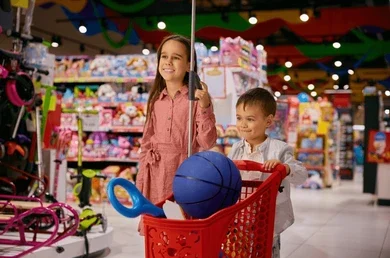
Toys to Play — Simple Things That Invite Big Imaginations
A good toy does not insist. It suggests. It offers form and possibility without dictating the story. A wooden block can be a bridge, a mailbox, a mountain; a plush figure can be a friend, a pillow, or the protagonist in an invented tale. The most useful toys are those that leave space for invention, that reward repetition, and that survive the inevitable tumbles and tests of attention.
Materials That Matter
The feel of a toy often determines whether it will be returned to. Warm wood, matte finishes, soft fabrics — these invite touch. Smooth edges reduce hesitation; sturdy seams mean a toy will last long enough to be loved. When materials are chosen with care, the toy becomes pleasant to handle and more likely to be explored again and again.
Toys that invite handling teach through doing. A ball that rolls in a satisfying way shows cause and effect. A stack of rings that lands with a soft clack teaches weight and balance. These small interactions, repeated over time, form the quiet lessons of play.
Quiet Cues, Big Lessons
Play often teaches without words. Dropping a peg into a hole, matching shapes, or pressing a simple button and hearing a brief chime — each is a tiny experiment in consequence. These micro-moments teach problem solving, sequencing, and persistence. They are short, repeatable, and immediately understandable.
Toys designed with modest feedback — a brief sound, a gentle light, a small movement — reward success without overwhelming. That kind of restraint keeps attention available for exploration rather than exhausting it on novelty.
Open-Ended Design
The best playthings resist being pinned down to a single purpose. Open-ended toys are fertile: they can be used as tools for construction, objects in pretend games, or instruments of rhythm. A set of blocks, a box of simple figures, a length of fabric — these items allow improvisation.
Open-endedness also stretches a toy’s lifespan. When a toy can be used in many ways, it grows with the child, shifting roles as abilities and interests change. This adaptability encourages creativity and reduces the impulse to discard when the first novelty fades.
Movement and Its Lessons
Movement teaches in a direct, bodily way. Push toys, pull animals, rolling cars — these support coordination and cause-and-effect thinking. Motion also invites planning: choosing a speed, aiming a push, predicting where something will stop.
Toys that encourage safe movement foster confidence. They make first steps feel like experiments rather than risks. A small wagon pulled across a room, repeated dozens of times, quietly builds balance and decision-making more reliably than a single lesson could.
Sound, Rhythm, and Silence
Sound can be a teacher or a tyrant. A short, clear tone signals success; an extended loop of music can dominate attention. The most helpful sound design is minimal and meaningful: a chime that rewards completion, a drum that invites participation, a soft melody that marks a transition.
Silence matters, too. Pauses in play allow for reflection. Toys that leave room for quiet — that do not constantly call for interaction — encourage deeper focus and imaginative narration, where the child fills the space with invented sound and story.
Social Play and Shared Stories
Play often becomes social by design. A building kit assembled side by side, a puppet passed between hands, a vehicle queued for a race — these actions teach negotiation, turn-taking, and empathy. Toys that invite collaboration become tools for social learning as much as cognitive development.
Shared play creates rituals: the same blocks brought out at the same time of day, the same song played before bedtime play. Those rituals anchor routine and make play both predictable and rich with possibility.
Durability as Value
Long-lasting toys are more than a convenience; they are a statement. Durable construction reduces waste and invites ongoing modification and repair — an encouragement to treat objects as companions rather than consumables. A toy that survives years of handling carries memories and can be reused, shared, and passed on.
Robust toys also mean uninterrupted play. When parts hold up and finishes remain safe to touch, play repeats without friction, and learning deepens in those repetitions.
Aesthetic Restraint
Toys that respect attention often wear a simpler palette and cleaner forms. That restraint helps the child’s imagination stand forward: less visual noise, more room for invention. Subtle design choices let play be led by action rather than a barrage of colors and lights.
This quiet aesthetics doesn’t mean dullness. It means that the toy supports activity rather than demanding it. The child becomes the center of the performance.
Play That Grows
The value of a toy shows over time. What begins as a stacking ring becomes a drum, then part of a tower, then a prop in a story. Good toys enable this evolution; they encourage multiple uses and reward different skills at different stages.
Choosing toys with that potential means investing in continued engagement rather than a single moment of amusement.
Toys to play with are instruments of attention. Chosen with thought, they invite repetition, encourage experimentation, and quietly transform ordinary rooms into laboratories for discovery. For a curated selection that emphasizes material quality, open-ended use, and lasting design, explore the collection at Sonpal Toys. Moments of real play and hands-on ideas appear on Instagram.
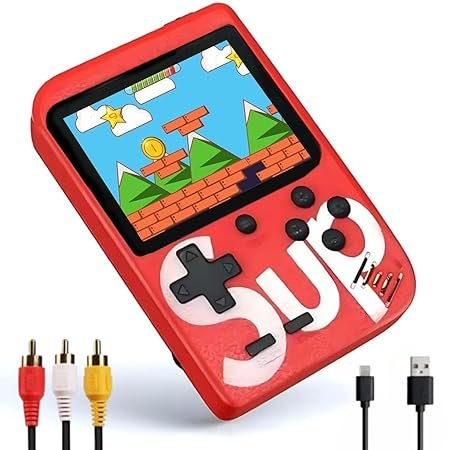
Level Up Nostalgia – Sonpal Toys SUP GAME 400 in 1 Retro Handheld Console HD Edition
🎮 Sonpal Toys SUP GAME 400 in 1 Retro Game Box Console – Relive the Classics in Your Hands
At Sonpal Toys, fun isn’t just for kids—it’s for everyone. That’s why we bring you the SUP GAME 400 in 1 Retro Handheld Console HD Edition<…
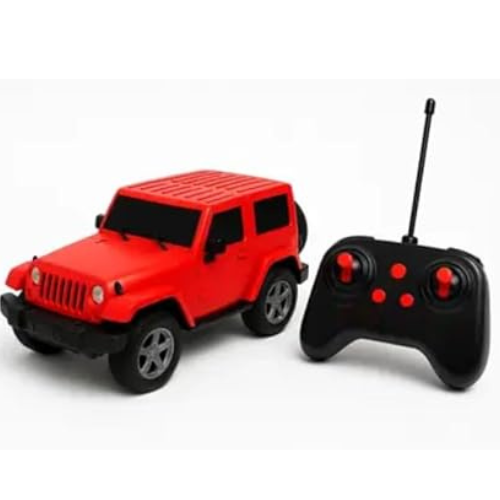
Sonpal Toys Remote Control Thar Car with Music Function, 1:24 Scale RC Vehicle, Rechargeable Battery, 16 x 8 x 8 cm, Red
Introduction
Meet the Remote Control Thar Car (Red)—a mini‑sized, 1:24 scale RC jeep inspired by the iconic Thar SUV. Featuring flashing LED lights, built‑in <stro…
